
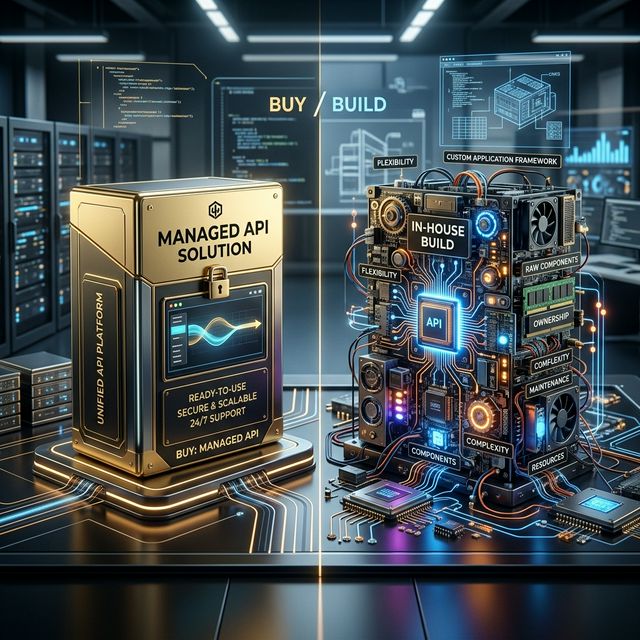
You are building a SaaS product and want to add a Voice AI agent. Do you spend two months writing raw LiveKit and WebRTC code, or do you use a managed API like Vapi and ship in two days?
The Managed "All-in-One" Abstraction
Platforms like Vapi or Retell AI abstract the entire Voice AI pipeline. You simply give them a system prompt, select a voice, and they return a WebRTC URL or phone number. They handle the VAD, the interruption logic, and the WebSocket streaming to Deepgram and ElevenLabs. This is magical for speed-to-market.
The Premium Tag
The cost of this abstraction is roughly $0.05 to $0.10 per minute on top of the raw component costs of the underlying LLM/TTS. Additionally, you are locked into the specific models and routing logic that the platform supports. If you want a highly custom function call workflow that integrates deeply with your unique backend database in real-time mid-sentence, managed platforms can become restrictive.
When to Build In-House
Using Pipecat or LiveKit manually requires senior engineering talent. However, you should transition to building in-house if you hit any of these three triggers:
- Volume: Your users are consuming thousands of hours of voice AI per month. Removing the managed provider's $0.05/min margin represents massive savings.
- Custom Data/RAG requirements: Your agent needs to query massive proprietary embeddings instantly mid-conversation without routing out to a generic webhook.
- Custom Endpoints: You are utilizing highly specialized, self-hosted open-source LLMs or local TTS models rather than standard APIs.
Transition from Prototype to Production
Have you outgrown your managed Voice AI provider? We help CTOs migrate from Vapi/Retell to custom, highly scalable in-house Pipecat/LiveKit architectures.
Discuss Migration