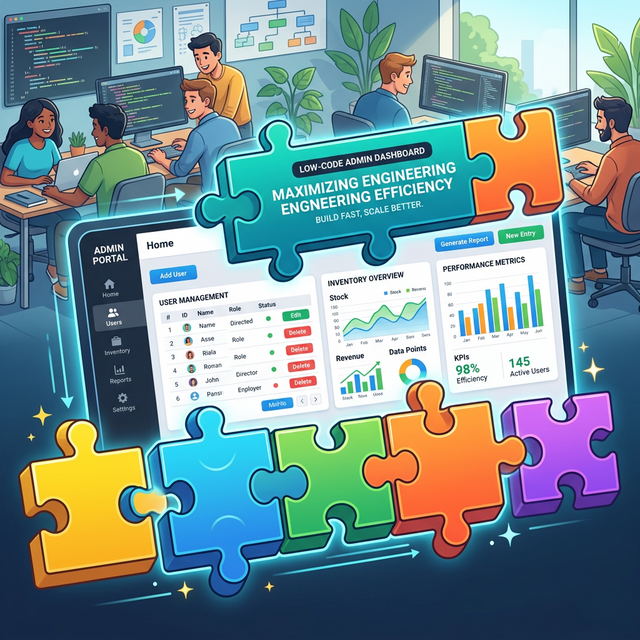

Building a SaaS product is universally recognized as one of the best business models in existence. Recurring revenue, high margins, and global scale. But technically executing it is a complex engineering challenge.
The Technical Blueprint for Modern SaaS
If you're reading this, you probably already know why you want to build a SaaS (Software as a Service) platform. You want to understand how it is built under the hood. As a leading SaaS development company, we have architected dozens of successful platforms. Here is our step-by-step technical blueprint for creating a scalable SaaS product in 2026.
Step 1: The Multi-Tenant Architecture Decision
Before writing a single line of React code, you must decide how your database will handle "tenants" (your customer companies). There are three primary ways to handle multi-tenancy:
- Database-per-tenant: High isolation, very secure, but expensive and an operational nightmare to manage migrations across 1,000 databases.
- Schema-per-tenant: A middle ground where one database holds multiple schemas. Better, but still complex for connection pooling.
- Table-based with Row Level Security (RLS): The absolute industry standard in 2026. All tenants share the same tables, but a
tenant_idcolumn maps to every row. Using tools like PostgreSQL with strict RLS (or utilizing platforms like Supabase), data leakage is mathematically prevented at the database kernel level. This is the path we strongly advocate.
Step 2: Choosing the Tech Stack
Your tech stack determines your developer velocity. You need tools that are strongly typed, widely supported, and scalable. Our highly recommended "Modern SaaS Stack" is:
- Frontend & Meta-framework: Next.js (React). It provides server-side rendering for SEO (crucial for marketing pages) and seamless API routing.
- Styling: Tailwind CSS combined with a component library like Shadcn UI (accessible, beautiful, and customizable).
- Backend/API: Node.js via Next.js API Routes for simple SaaS, or a dedicated Go/NestJS backend if executing highly async, heavy CPU tasks (like AI workflow automation services).
- Database: PostgreSQL managed by an ORM like Prisma or Drizzle for strict TypeScript types.
Step 3: Implementing Authentication and RBAC
Authentication (Auth) is proving who the user is. Authorization (Role-Based Access Control, or RBAC) is determining what they can do. Hardcoding RBAC is a common failure point.
Your system must accommodate roles like "Admin", "Editor", and "Viewer" within the context of a specific tenant. A user might be an Admin for Company A, but a Viewer for Company B. Utilizing modern auth providers like Clerk, Auth0, or NextAuth.js configured with custom JWT claims is critical. Do not write a custom password hashing algorithm.
Step 4: The Billing Engine (Stripe Integration)
Recurring billing is significantly harder than e-commerce. You have to handle prorations (user upgrading mid-cycle), failed card retries (dunning), and complex tiered pricing.
To implement this robustly:
- Set up Stripe Checkout to handle the payment UI safely outside your app's scope.
- Configure Stripe Webhooks. This is the crucial part. Your SaaS database must listen to Stripe's server. When Stripe fires a
customer.subscription.updatedevent, your webhook endpoint catches it and updates thestripe_plan_idandsubscription_statusin your database. - Protect your SaaS routes by checking the user's local database subscription status on every server-side request.
Step 5: Developing the Core Application Logic
With infrastructure (Auth, Billing, Database) handled, you finally build the actual software. Whether it's a project management tool, an HR platform, or an AI writing assistant, apply these principles:
- Optimistic UI Updates: When a user clicks "save," update the UI immediately before the server responds to make the app feel blazingly fast using React's
useOptimisticor TanStack Query mutations. - Component Modularity: Build pure, reusable components. A table used in the "Users" dashboard should be the exact same underlying component used in the "Invoices" dashboard.
Step 6: Testing, Deploying, and Monitoring
A SaaS handles people's businesses; downtime costs them money. For deployment:
- Use Vercel or AWS Amplify for zero-downtime frontend deployments pushed directly from GitHub.
- Implement Sentry to capture runtime frontend and backend errors so you know about bugs before your customers report them.
- If your SaaS requires a mobile companion app for field workers, coordinate via cross-platform APIs with a mobile app development company approach using React Native, allowing you to reuse massive chunks of your web business logic on mobile.
Conclusion
Building a SaaS is a marathon of focused engineering. The most common mistake founders make is treating it like a standard website. By rigidly adhering to multi-tenant security, robust webhook handling for billing, and a strictly typed modern stack, you lay a foundation capable of scaling to thousands of paying organizations.
Accelerate Your SaaS Build
Do not waste months figuring out Webhooks and Row-Level Security. Our expert SaaS engineers have pre-built robust infrastructure foundations. We focus on building your unique business logic so you can launch faster.
Talk to a SaaS Architect