If your SaaS application cannot seamlessly expose its operations and data context to third-party AI agents, you will be abstracted away by competitors who can. Welcome to the era of the Model Context Protocol.
The Shift from UI-First to API-First
Historically, software was built for human eyes. The User Interface (UI) was the primary product, and an API was an afterthought built a year later to satisfy enterprise clients. Today, that hierarchy is inverted. High-value interactions are increasingly happening system-to-system, managed by AI orchestrators. A platform with a terrible UI but a phenomenal API will beat a beautiful product with a closed ecosystem, because developers will route around the UI entirely.
Understanding the Model Context Protocol (MCP)
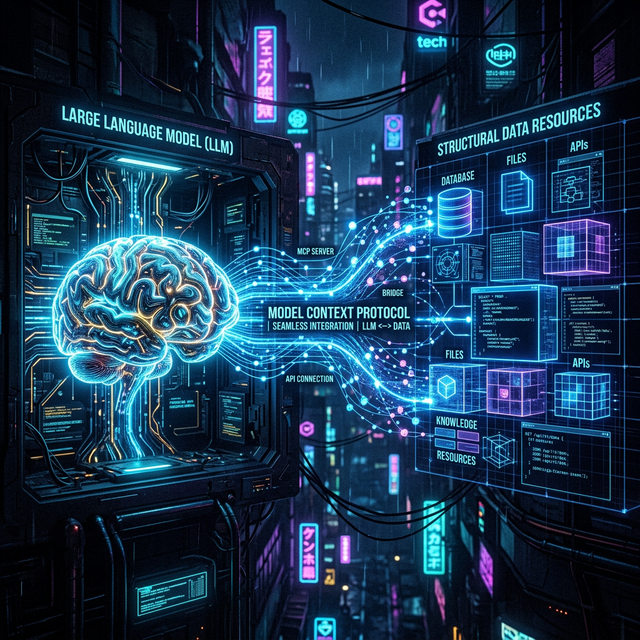
The Model Context Protocol (MCP) represents a paradigm shift. Before MCP, every developer had to build custom integration glue to allow an LLM to "talk" to their database or internal tools. MCP standardizes this layer—it is a universal translator that allows any foundation model to securely access external data sources and tools without custom coding.
By exposing your SaaS via an MCP server, you instantly make your entire platform's capabilities available to the user's local AI agent. Your product transforms from an isolated application into a seamlessly integrated superpower within the user's primary workflow.
Architectural Implications for Your Startup
If you are planning a new application, the architecture must reflect this reality from week one:
- Headless Core: Build all business logic, validation, and database operations strictly behind an API layer. The web frontend and mobile app should simply be clients consuming this identical API.
- Granular Webhooks: Event-driven systems rely on knowing when states change. Your app must broadcast Webhooks for every major entity creation, update, or deletion.
- Secure Context Exposure: When integrating with MCP, granular role-based access control (RBAC) is critical. AI agents operate with extreme speed; a security flaw in what context is exposed can lead to massive unforced data leaks.
Future-Proof Your Platform Architecture
We build robust, purely API-first backends using NestJS, ensuring your product is ready for seamless MCP and AI agent integration from day one.
Audits & Architecture Review