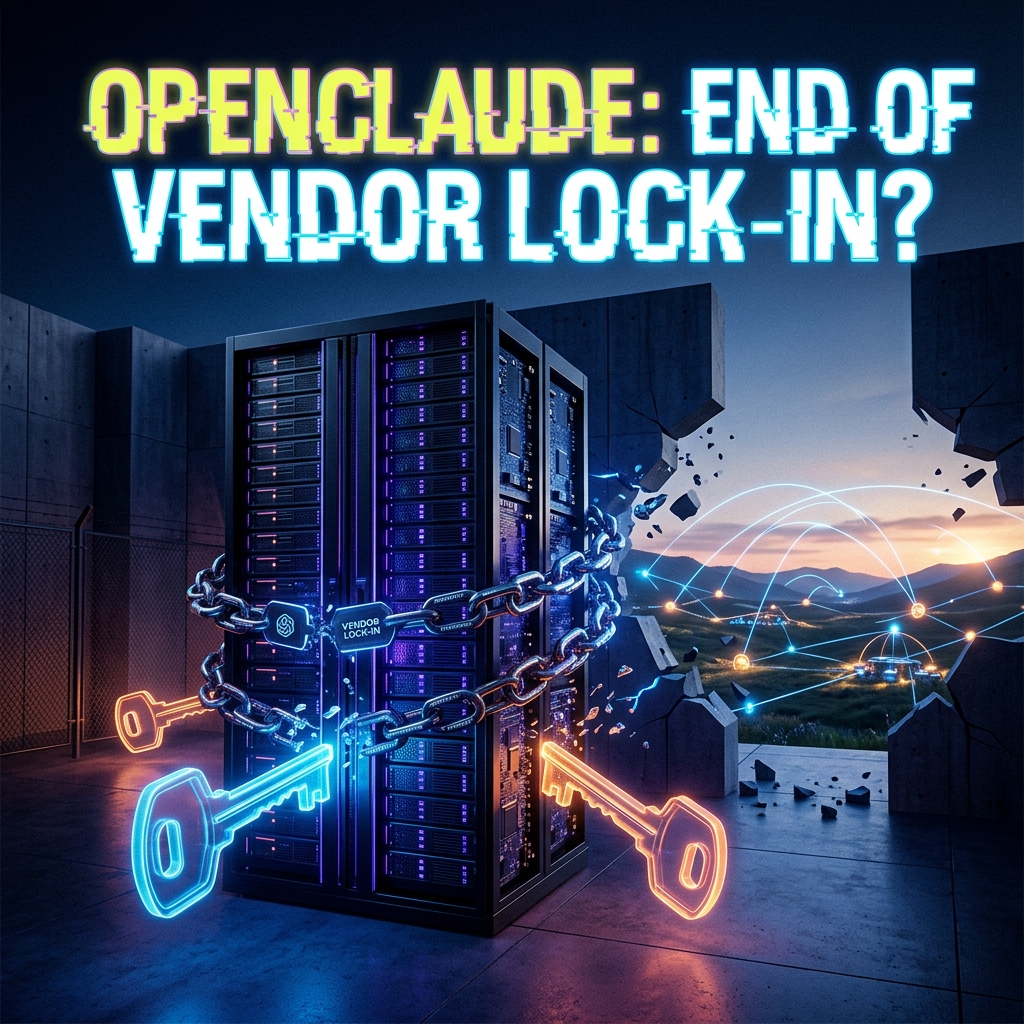
The fastest reaction to Anthropic's massive source code leak wasn't corporate espionage. It was the immediate, violent decoupling of the User Experience from the proprietary API backend. Here is why the birth of 'OpenClaude' changes everything for SaaS founders.
The Anatomy of a Rebellion
On April 1, 2026, Anthropic inadvertently exposed over 500,000 lines of unobfuscated source code for "Claude Code" via a misconfigured source map. The initial industry reaction was predictable: security analysts dissected the code for unreleased features (like KAIROS and ULTRAPLAN), while pundits debated whether the leak was a catastrophic failure or a multi-dimensional marketing stunt.
However, the most significant outcome of the leak didn't come from security analysts or pundits. It came from the open-source developer community. Within 48 hours of the leak, a project emerged on GitHub dubbed OpenClaude.
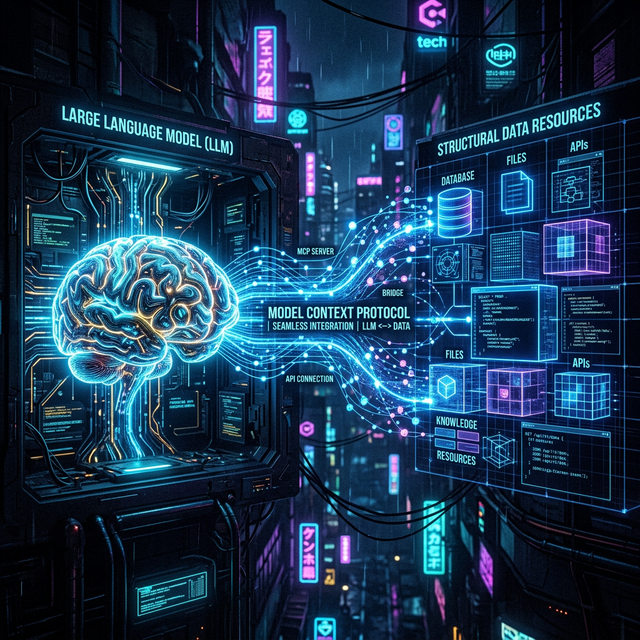
OpenClaude was not a malicious attempt to steal Anthropic's algorithmic secrets (which cannot be extracted from a front-end CLI app anyway). Instead, it was an architectural rebellion. Developers took the leaked CLI orchestration layer—the masterful, Model Context Protocol (MCP) powered User Experience that made Claude Code so beloved—and systematically ripped out the hardcoded coupling to Anthropic's proprietary API.
They rewired the backend logic to accept any standard LLM endpoint. Suddenly, developers were running the Claude Code interface using OpenAI's GPT-4o, Google's Gemini, and most importantly, entirely local, uncensored, open-weight models via Ollama. They fundamentally decoupled the UX from the intelligence.
The Death of the proprietary Backend
For SaaS founders looking toward the future, the rapid emergence of OpenClaude is the canary in the coal mine. It highlights a critical shift in developer psychology and market dynamics: Users love exceptional Agentic UX, but they violently reject API vendor lock-in.
For the last three years, the tech ecosystem has operated under the assumption that the foundation model providers (OpenAI, Anthropic, Google) would entirely dictate the terms of engagement. Startups built their platforms as tightly-coupled "wrappers" around a specific API. If you built a legal drafting tool on GPT-4, your profitability, your uptime, and your feature capabilities were entirely at the mercy of OpenAI's infrastructure.
Anthropic's "Claude Code" was the ultimate expression of this tight coupling. It was a brilliant, tightly integrated product designed to funnel compute spend directly into Anthropic's massive server farms.
OpenClaude destroyed that paradigm overnight. By decoupling the interface from the execution model, the community proved that the orchestration layer (managing context, interacting with the file system, handling tool calls) does not need to be married to the reasoning engine.
Why Model-Agnosticism is the New Baseline
If you are building an AI-powered SaaS product in 2026, forcing your users into a single model ecosystem is no longer just a technical deficiency; it is a fatal strategic error. Here are the three driving forces behind the mandate for model-agnostic architecture:
1. The Commoditization of Reasoning
As we have noted extensively, foundational intelligence is commoditizing rapidly. The performance delta between Claude 3.5 Sonnet, GPT-4o, and the leading open weights models is mathematically negligible for 90% of standard B2B workflows. When reasoning is a commodity, forcing a user to pay a premium for a specific brand of reasoning feels exploitative. Users want the freedom to choose the cheapest, or the fastest, or the most locally-secure commodity to execute the workflow.
2. The Privacy and Compliance Mandate
Enterprise adoption of AI has been bottlenecked by data privacy. Many Fortune 500 companies have blanket bans on sending proprietary data or source code to third-party APIs like Anthropic or OpenAI. OpenClaude bypasses this entirely by allowing developers to plug in local Llama 4 or Mixtral models hosted securely on their own VPCs (Visual Private Clouds) or laptops via Ollama.
For SaaS builders, offering a "Bring Your Own Keys" (BYOK) or "Bring Your Own Model" approach is the ultimate enterprise sales hack. It circumvents the most strenuous InfoSec objections because your proprietary interface acts merely as the steering wheel; the enterprise owns the engine and the data exhaust.
3. Operational Resilience (Avoiding the OpenAI Tax)
Tying your startup's unit economics to a single model provider is financial self-sabotage. When a provider arbitrarily raises API pricing, throttles throughput during high-demand events, or suddenly deputizes safety protocols that break your specific use-case, your entire product goes dark.
Model-agnostic architecture provides operational resilience. If Anthropic goes down, your platform's router logic should automatically fall back to Gemini or OpenAI without the end-user ever noticing a disruption in service. OpenClaude proved that building this orchestration abstraction is not only possible, but highly desirable.
How to Architect for the "OpenClaude" Era
The philosophical shift from "Wrappers" to "Agnostic Orchestrators" requires a fundamentally different backend structure. Founders must stop treating LLMs as the core architecture of their product and start treating them as swappable compute peripherals.
Abstracting the Router Logic
The core of an agnostic SaaS is the LLM Router. This is a middleware layer that standardizes incoming prompts from your UI and translates them into the specific schema required by the destination model. Whether the user selects Anthropic's verbose XML tags or OpenAI's JSON mode, your router must handle the schema transformation dynamically.
Embracing the Model Context Protocol (MCP)
The magic of OpenClaude wasn't just in the prompt routing; it was in the tool execution. The adoption of the Model Context Protocol (MCP) is vital here. Because MCP standardizes how models interface with local data and APIs, you can swap the reasoning engine without breaking the tool connections. Your SaaS app exposes an MCP server, and any LLM the user plugs in can read your app's data in the exact same format.
Deploying Hybrid Compute Models
The future of AI SaaS is a hybrid approach. For complex logical planning (like Anthropic's aborted ULTRAPLAN), you might route requests to a massive, centralized cloud model. However, for real-time, high-frequency tasks (like syntax auto-completion or local file scanning), the architecture should default to a smaller, sub-8B parameter model running locally on the user's hardware via WebGPU or Ollama connectors. This drastically cuts your API overhead and provides the user with zero-latency response times.
The End of the Ecosystem Jail
Anthropic, OpenAI, and Google have spent billions trying to build "Ecosystem Jails"—walled gardens where you use their chat interface, their tools, and their compute credits. OpenClaude is the crowbar that just broke the locks.
The developer community has spoken: they want the UX of Claude Code with the freedom of Ollama. They want orchestration to be separate from inference.
As you build your next feature, step back and ask yourself: "Are we building a dependency on a single vendor, or are we building a resilient orchestration layer?" If Anthropic disappeared tomorrow, would your app survive? The OpenClaude rebellion proves that survival favors the agnostic. Build your software accordingly.